Democratizing Connectivity
The Bump app turns every phone into part of a distributed peer-to-peer network
Join the Public Beta
Now available on Android in Brazil and Colombia
The Bump app turns every phone into part of a distributed peer-to-peer network
Bump democratizes access to connectivity by letting postpaid users share excess bandwidth with those who are priced out of access, enabling seamless, private phone-to-phone communication.
Five things the app does, in the order you'll meet them.
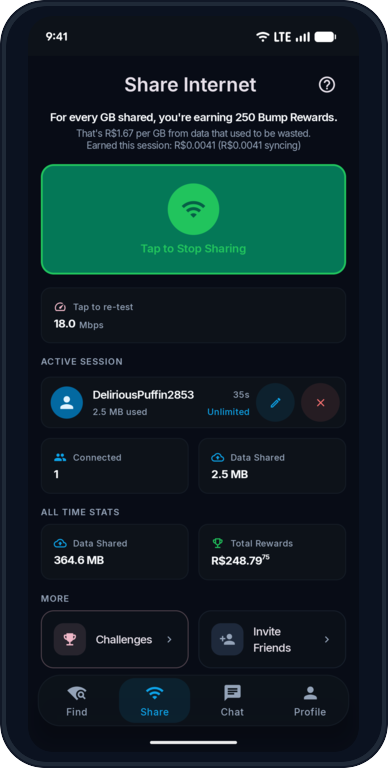
Turn on sharing and choose how much data to give. Your phone becomes a hotspot for people nearby, and you approve each one.
How it works →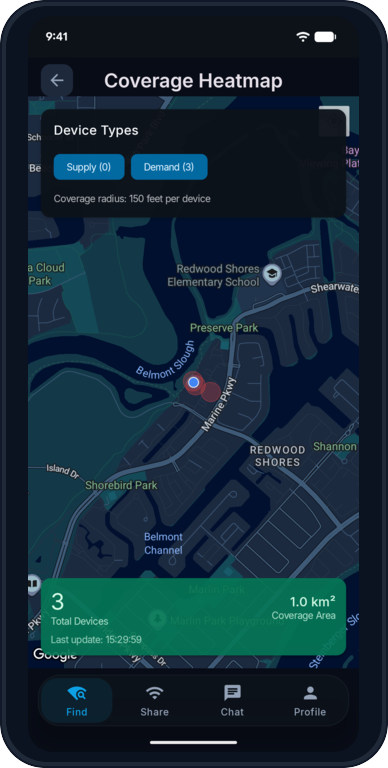
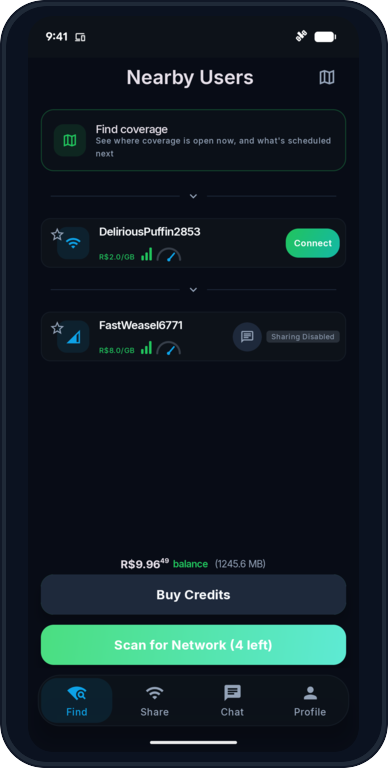
See who's sharing around you, with signal and price, in the list and on the coverage map.
How it works →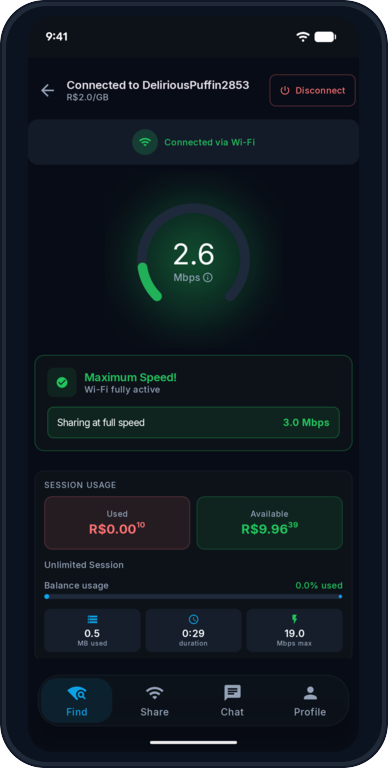
One tap and your phone joins theirs directly. You pay by the megabyte, only for what you use, through an encrypted tunnel the sharer can't read.
How it works →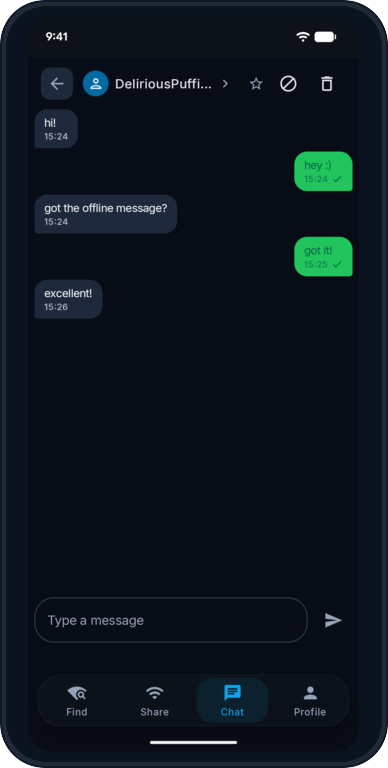
Messages travel phone to phone over Bluetooth. If the other person is out of range, the message waits on your phone and keeps moving through other Bump phones until it arrives, encrypted the whole way.
How it works →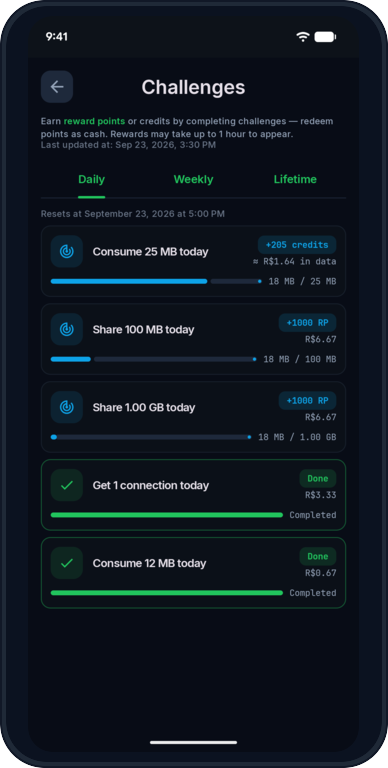
Points for every megabyte you carry, plus challenges and bounties for covering places that need it. Cash out with Pix or Bre-B.
How it works →Connectivity is most expensive where people can least afford it. Over 1 billion people own a mobile phone but have no or limited connectivity.
Brazil is the fifth-largest internet economy, with a massive digital divide and 86% Android market share.
Colombia has over 100 million mobile lines but fewer than 20 million are postpaid. Most people are prepaid, and cost is the top reason households stay offline.
Common questions about sharing and using Internet on Bump.
Bump turns your phone into part of a peer-to-peer network. People with data to spare share their Internet connection with people nearby who need it, and get paid for it. No SIM swaps, no contracts, no special hardware.
Open the app, tap Share, and choose how much data you are willing to give. Bump advertises your phone over Bluetooth so nearby users can find you and connect. Your phone bridges its mobile data or Wi-Fi to them over a Wi-Fi Direct connection, just like a regular hotspot.
Open the app and check the coverage map for sharers around you, along with their signal strength and price. Pick one, tap Connect, and your phone links directly to theirs. You pay with low-cost Bump credits only for the data you actually use. Credits can be purchased with a credit card, with Pix in Brazil, or with PSE in Colombia, starting from R$4 in Brazil and 10,000 COP in Colombia. Unlike most mobile data plans, which expire within a month or less, the credits you buy never expire.
Share your connection. Every megabyte that flows through your phone earns you reward points, and you decide how much to share and when. Your points build up in the app while you go about your day, and you can convert them back into money using Pix in Brazil or Bre-B in Colombia.
No. All traffic runs through an encrypted VPN tunnel from your phone to the Internet. The sharer only relays scrambled bytes and cannot see what you browse, and you cannot see theirs. Privacy is built into the design, not bolted on.
Bump is in public beta on Android in Brazil and Colombia. You can download it from Google Play today. More regions are on the way.